
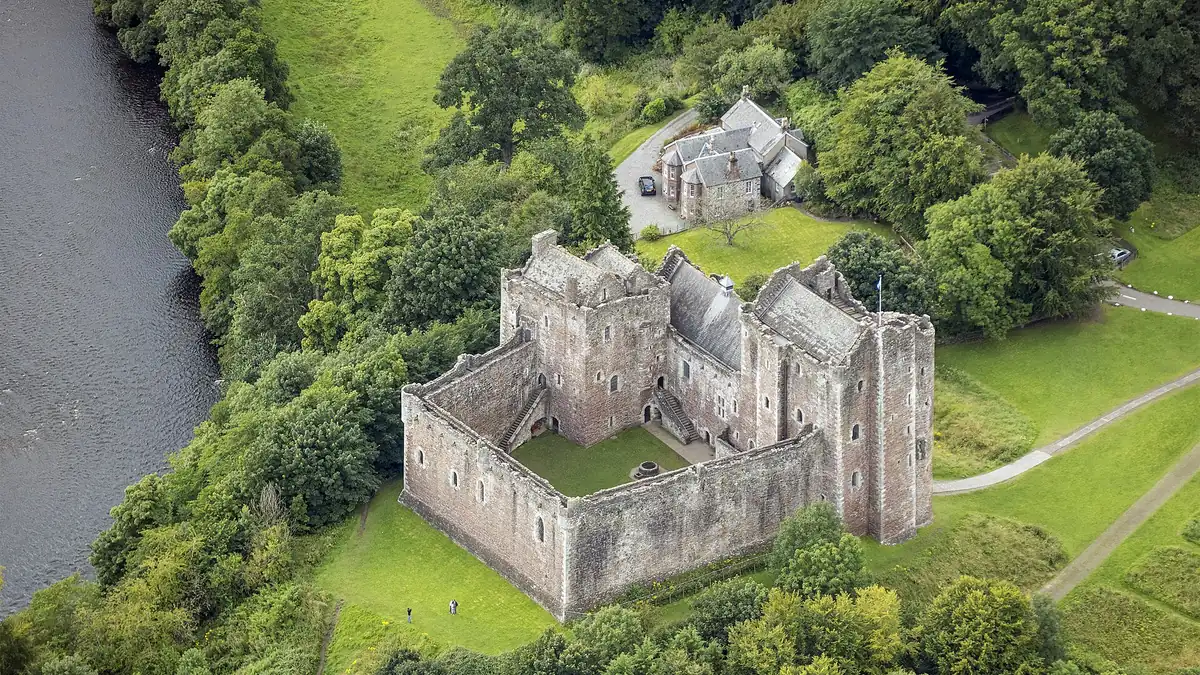
Photo: Godot13 / Scotland-2016-Aerial-Doune Castle (and Castle keeper's cottage).jpg · CC BY-SA 4.0 · cropped
A date across Stirling, Falkirk and Clackmannanshire can take very different forms. You might want a film and an easy journey home, a short local-history visit or a full afternoon exploring a castle and its surroundings.
Start by choosing the scale of the outing. The town guides below offer detailed local plans. The six suggestions that follow take you beyond those town-centre attractions, into smaller places, gardens and countryside.
This area covers several council boundaries and stretches well beyond a single walkable centre. Choose one main destination, check its opening arrangements and give yourselves time to enjoy being there.
Choose a town for your date
Stirling suits a day of historic buildings, art or live performance. Its guide covers the castle, Old Town Jail, Smith museum, Wallace Monument and other city choices. Expect hills and allow travel time for venues beyond the centre.
Falkirk offers major engineering landmarks alongside a historic house, games and evening entertainment. Use the town guide for the Wheel, Kelpies and Callendar House, rather than trying to add all three to a short meeting.
Alloa is a useful choice for a more modest afternoon or evening. Its guide combines the tower and local heritage with a nearby waterside walk, cinema, live events and bookable sport.
Bo’ness has a distinctive railway and film-history focus. Choose it for a heritage train outing, the Hippodrome, Kinneil Estate or a performance at the Barony, with the foreshore available for a shorter outdoor plan.
For a first meeting, the most convenient town for both people may be the best choice. Save the longer rural outings for a day when you have agreed transport, time and how much walking you both enjoy.
1. Explore Doune Castle and the village
Doune Castle gives you a substantial historic visit beyond Stirling. Its great spaces, courtyard and screen associations make it appealing to people whose interests begin with architecture, history or film.
Use the included audio guide if you want more context, taking headphones and a charged phone. Then leave space for your own conversation rather than listening to every passage at the same pace.
You can make the castle the main event and find something to eat in Doune afterwards. Check last entry before deciding which way round to do lunch and the visit.
Access involves historic surfaces and stairs, so consult the detailed guidance rather than assuming all rooms are straightforward to reach. Parking near the castle is limited; the official page lists alternatives in the village.
2. Spend a quieter afternoon in Dunblane
Dunblane Cathedral offers a free historic visit with room to pause over architecture and detail. Combine it with a look around the town and a café stop for an afternoon that does not need a long attraction list.
This is a working church. Visitor access can change for services and private events, so check the current notices before travelling. Keep conversation quiet inside and save a longer discussion for afterwards.
The official access information describes a ramped entrance and level areas inside, while also identifying parts that are not open. Read it alongside any arrangements you need for the journey.
Dunblane has a railway station, which can make it a useful option for a date without a car. Check your route and return service rather than treating a visit here as an automatic extra after Stirling.
3. Save Castle Campbell for its visiting season
Castle Campbell, above Dollar, offers a dramatic setting with views over the surrounding landscape. It is a good choice when you both want the approach and setting to be part of the experience.
The castle’s regular visiting season runs from April to September. An autumn or winter walk in the area does not include access to the castle interior, so plan the paid visit for an advertised opening day.
The approach deserves attention. Even the upper public car park leaves a walk to the castle, and the route includes steep sections. Historic Environment Scotland advises that the terrain is unsuitable for visitors with limited mobility.
If you choose to walk through Dollar Glen, use the National Trust for Scotland’s current route information and check for path closures. Keep this as the main outing, with food in Dollar afterwards if time allows.
4. Follow a short route into Alva Glen
Alva Glen brings a burn, waterfalls and wooded scenery into a walk above the village. It offers a different outdoor experience from the broad waterside paths in some of the town guides.
Agree a route that suits both of you before entering the glen. A shorter walk to enjoy the water can be enough; climbing further should be a shared decision, not something one person discovers halfway through.
The council warns of uneven, slippery and unfenced sections with steep drops. This is not the best choice for a distracted stroll in unsuitable shoes, and conditions matter after rain.
Choose daylight, take your time and turn back if the ground feels uncomfortable. For an easy first meeting or a date needing firm, level access, pick a town venue instead.
5. Visit Blackness Castle on the Forth
Blackness Castle makes a striking destination on the shore of the Firth of Forth. Its walls, towers and open setting give you a strong sense of place before you start learning its history.
Allow the castle to be the main activity. You can take time over the different views and compare the parts of the building that feel most impressive, rather than racing through for a photograph.
There are uneven surfaces, stairs and exposed areas, so wear practical footwear and read the access guidance. The waterside position can feel brisk even when the weather inland seems mild.
Parking is limited and larger vehicles face restrictions. Use the official directions and check your onward journey if you are travelling by public transport. Blackness is a separate outing from Bo’ness, not another attraction in its town centre.
6. Find the unexpected at the Pineapple
The Pineapple, near Dunmore, gives you an unusual focus for a short garden and woodland visit. The elaborate fruit-shaped structure is something to look at, laugh about and examine from different angles.
The folly itself is not open to visitors. The free visit is to the walled garden and surrounding grounds, which are open throughout the year. That distinction matters if you are expecting an indoor attraction.
Bring a picnic if the weather suits, or make it a modest stop before a meal elsewhere. There is an all-ability path from the car park to the pond viewing platform, although that does not describe every route through the grounds.
Follow the Trust’s directions and take care on the access road. This is a good slower outing, especially when you would rather spend time talking than follow a packed programme.
Three ways to plan the date
A town meeting with an easy finish
Choose Alloa for a short heritage visit, or Stirling for a museum and café. Check the opening day and agree an initial hour or two, leaving the rest of the afternoon optional.
A full historic afternoon
Choose Doune or Blackness, book the visit and leave time for food nearby. Both give you enough for one substantial outing without adding another castle just because it looks close on the map.
An outdoor date at your own pace
Pick the Pineapple for gardens and a shorter wander, or Alva Glen for a more demanding path. The right choice depends on the walking you both want to do, as well as the forecast.
Travel, seasons and choosing well
Stirling, Alloa and Dunblane have railway stations. Falkirk has more than one station, while Bo’ness requires an onward journey from the mainline network. Use Traveline Scotland to check the actual route to your venue and the return.
For a lower-cost date, consider the free cathedral visit or the Pineapple’s grounds, allowing separately for travel, parking and food. For rain, look at the indoor choices in the town guides; castle grounds and wooded glens are not weatherproof substitutes.
Opening seasons can separate two places that otherwise look easy to combine. Confirm the main attraction first, then add one flexible stop. A date usually benefits more from time together than from another destination ticked off.